
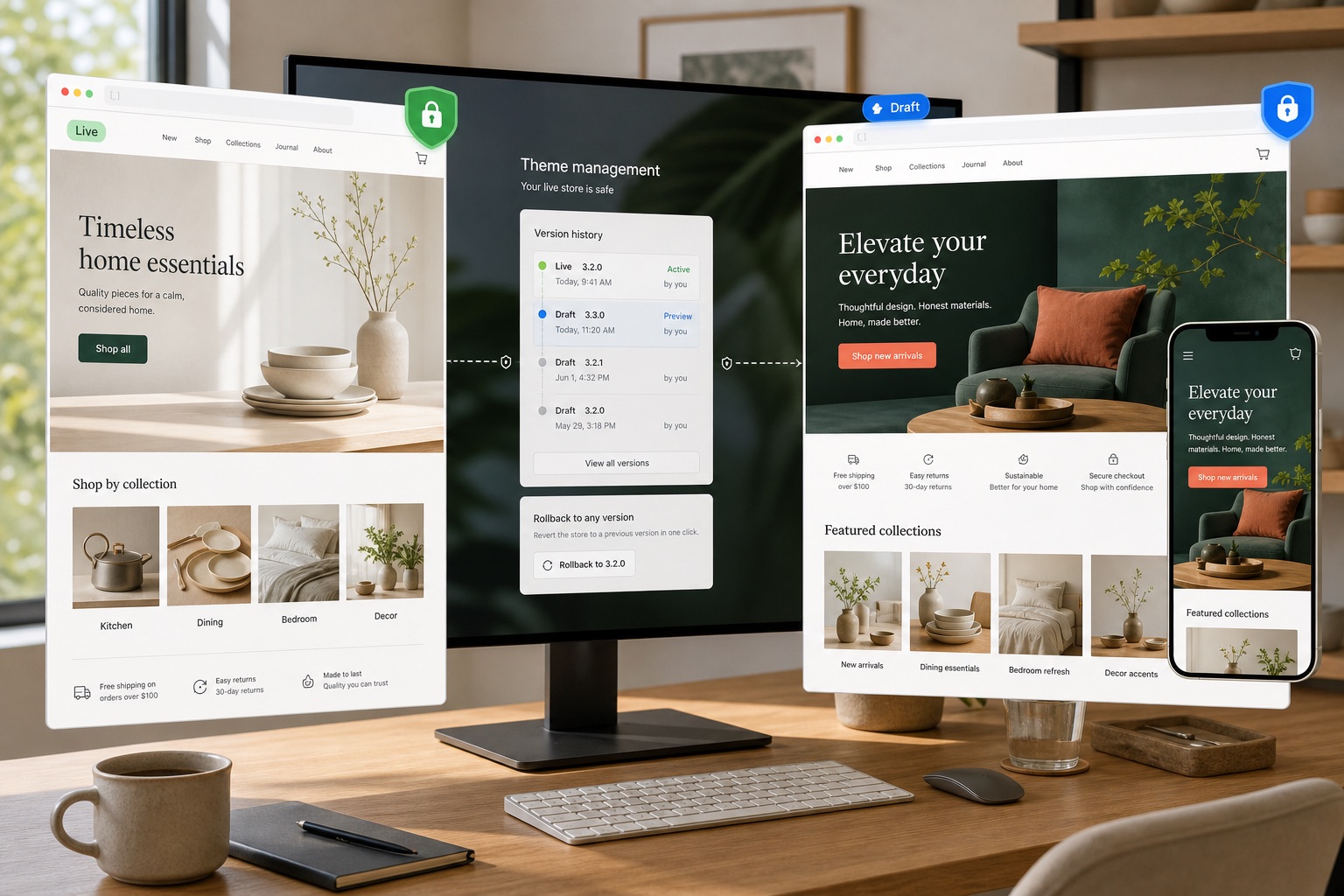
When merchants hear “an AI agent edits your website,” the obvious question is whether that agent can break the store customers are using. The practical answer depends less on the model and more on where the system is allowed to write.
Shopify already separates the current theme from draft themes
Shopify identifies the theme customers see as the published theme. Other themes sit in the Draft themes section. A merchant can preview those drafts, customize them, and publish one later. Publishing a new theme moves the previous published theme back into drafts rather than deleting it.
This native separation is the foundation for safe autonomous work. The system does not need to invent its own preview website or ask the merchant to accept edits on the live theme.
A safe agent needs a live-theme guard, not just good intentions
Calling something a draft is not enough if the implementation can still send writes to the wrong theme ID. The system should record the live theme when a run begins and reject any change that targets it. Every asset update should be bound to the created draft.
Prettifai passes both the selected source theme and the protected live theme through its worker pipeline. That makes “live store untouched” an operational rule rather than a sentence in a prompt. A draft is only one part of a safer AI theme-editing system.
Draft previews let merchants judge the whole experience
A screenshot is helpful, but a theme preview is more useful. It lets the merchant navigate the page, inspect mobile behavior, open menus, and see how real products and apps behave in context. Shopify also supports shareable previews for unpublished themes.
The review should answer a business question: “Would I prefer customers to see this version?” Only after that answer is yes does publishing become relevant.
A draft should remain available when work encounters a problem
Deleting every failed draft would make diagnosis and recovery harder. A robust system preserves the current evidence, repairs from known checkpoints, and removes obsolete drafts only through a deliberate retention process. This keeps an interrupted run from becoming invisible.
Merchant-controlled publishing is the clean boundary
Autonomy is valuable in the repetitive work: analysis, implementation, responsive adjustments, visual comparison, and regression checks. The final publish decision is different. It affects customers, revenue, and campaign timing, so it should remain with the merchant.